
Vaccine Storage
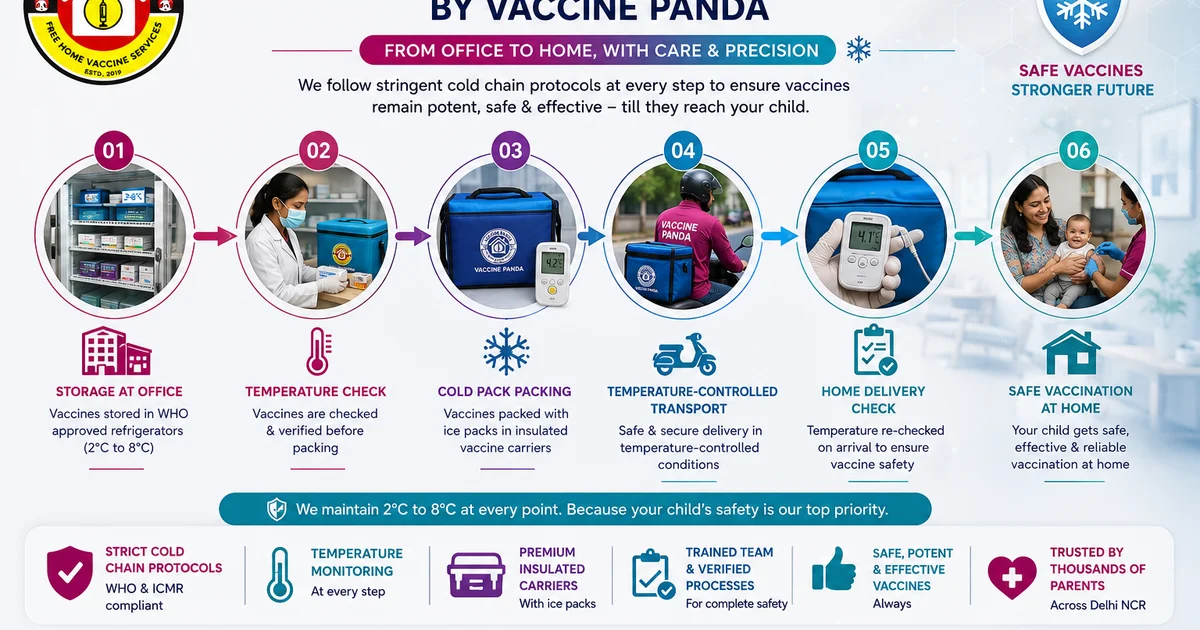
Vaccine Panda ensures effective vaccine storage through cold chain management. Learn how we maintain vaccine potency. Book home vaccination in Delhi NCR.
Cold Chain Vaccine Storage: How Vaccine Panda Keeps Doses Effective
As a parent, you want to ensure your child receives the best possible protection against vaccine-preventable diseases. One crucial aspect of vaccination is the storage and handling of vaccines. In this blog post, we will discuss the importance of cold chain vaccine storage and how Vaccine Panda maintains the potency of vaccines.
What is Cold Chain Vaccine Storage?
Cold chain vaccine storage refers to the process of storing and transporting vaccines at a consistent refrigerated temperature to maintain their potency. According to the World Health Organization (WHO) and the Centers for Disease Control and Prevention (CDC), vaccines must be stored at temperatures between 2°C and 8°C to remain effective.
Why is Cold Chain Vaccine Storage Important?
Vaccines are sensitive biological products that can be damaged by temperature fluctuations. If vaccines are not stored or transported properly, their potency can be compromised, reducing their ability to provide immunity against diseases. The American Academy of Pediatrics (AAP) and the Indian Academy of Pediatrics (IAP) emphasize the importance of proper vaccine storage and handling to ensure the effectiveness of vaccination.
How Vaccine Panda Maintains Cold Chain Vaccine Storage
Vaccine Panda understands the importance of cold chain vaccine storage and has implemented a robust system to maintain the potency of vaccines. Our vaccines are stored in refrigerators that are calibrated and monitored regularly to ensure consistent temperatures. We also use temperature-controlled transport vehicles to transport vaccines to our patients' homes. Our certified GNM nurses and doctors oversee the storage and handling of vaccines to ensure that they are administered effectively.
View our Full Vaccine Catalogue to learn more about the vaccines we offer. You can also Book a Home Vaccination Visit to have our team of healthcare professionals administer vaccines to your child in the comfort of your own home.
Vaccine Storage and Handling Guidelines
The IAP 2025 schedule provides guidelines for vaccine storage and handling. Some key guidelines include:
- Storing vaccines in a dedicated refrigerator at a consistent temperature between 2°C and 8°C
- Using a thermometer to monitor the temperature of the refrigerator regularly
- Keeping vaccines away from direct sunlight and heat sources
- Using ice packs or cold packs to transport vaccines
Common Mistakes in Vaccine Storage and Handling
Some common mistakes in vaccine storage and handling include:
- Storing vaccines at incorrect temperatures
- Failing to monitor the temperature of the refrigerator regularly
- Exposing vaccines to direct sunlight or heat sources
- Not using temperature-controlled transport vehicles
Frequently Asked Questions
Here are some frequently asked questions about cold chain vaccine storage:
- Q: What happens if vaccines are not stored properly? A: If vaccines are not stored properly, their potency can be compromised, reducing their ability to provide immunity against diseases.
- Q: How does Vaccine Panda ensure the potency of vaccines? A: Vaccine Panda ensures the potency of vaccines by storing them in refrigerators that are calibrated and monitored regularly, using temperature-controlled transport vehicles, and having certified GNM nurses and doctors oversee the storage and handling of vaccines.
- Q: Can I store vaccines at home? A: No, it is not recommended to store vaccines at home. Vaccines require specialized storage and handling to maintain their potency, and home storage can compromise their effectiveness.
Certified GNM nurses + doctor oversight. Vaccines at up to 12% off clinic prices.
Book Now → or call 9999 109 040
Tags: