
Hexaxim vs Pentaxim
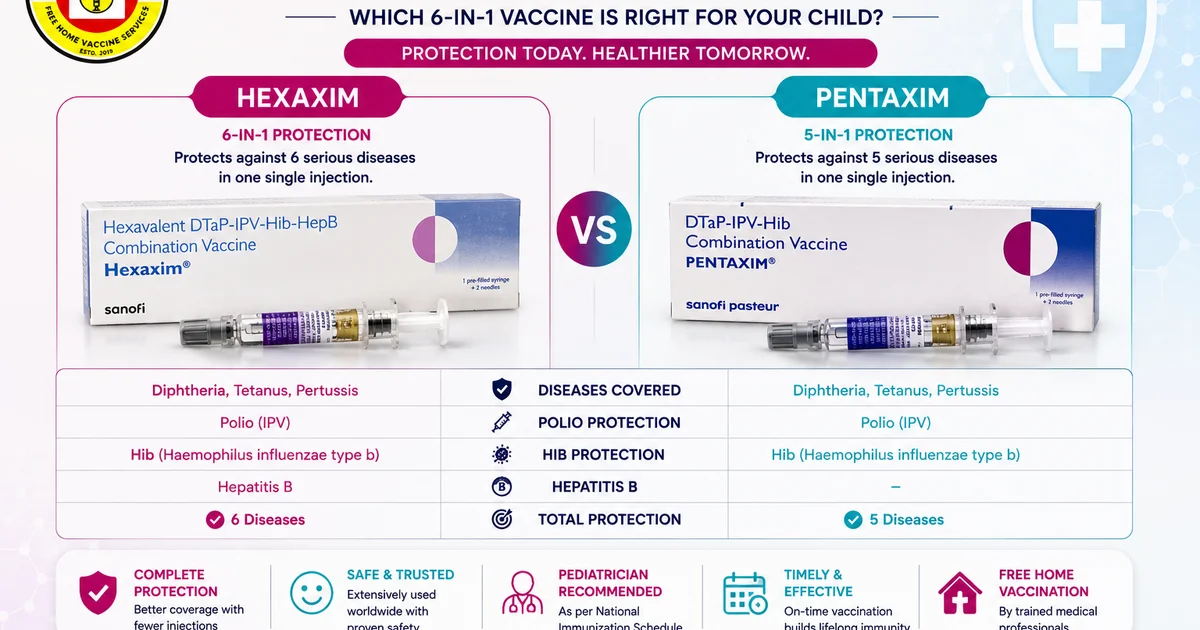
Learn the difference between Hexaxim and Pentaxim combination vaccines, recommended by IAP 2025, CDC, WHO, and AAP. Book home vaccination in Delhi NCR with Vaccine Panda.
Combination Vaccines: Hexaxim vs Pentaxim
As a parent, it's natural to have questions and concerns about the numerous vaccines your child needs to stay healthy. With so many options available, it can be overwhelming to decide which vaccine is best for your little one. Two popular combination vaccines, Hexaxim and Pentaxim, have been widely used to protect children against multiple diseases. But what's the difference between them? In this article, we'll delve into the details of these vaccines, exploring their composition, benefits, and recommended usage.
Introduction to Combination Vaccines
Combination vaccines are designed to protect against multiple diseases in a single shot. They offer several benefits, including reduced pain and discomfort for the child, fewer clinic visits, and improved compliance with vaccination schedules. The Indian Academy of Pediatrics (IAP) 2025 schedule, CDC, WHO, and AAP all recommend the use of combination vaccines to simplify vaccination regimens and increase vaccine coverage.
Hexaxim Vaccine
Hexaxim is a hexavalent vaccine, meaning it protects against six diseases: diphtheria, tetanus, pertussis, poliomyelitis, hepatitis B, and Haemophilus influenzae type b (Hib). It's typically administered in three doses at 6, 10, and 14 weeks of age, with a booster dose at 16-18 months. Hexaxim is widely used in many countries, including India, and has been shown to be safe and effective in preventing the targeted diseases.
Pentaxim Vaccine
Pentaxim, on the other hand, is a pentavalent vaccine, protecting against five diseases: diphtheria, tetanus, pertussis, poliomyelitis, and Haemophilus influenzae type b (Hib). It's usually given in three doses at 6, 10, and 14 weeks of age, with a booster dose at 16-18 months. While Pentaxim doesn't provide protection against hepatitis B, it's often used in conjunction with a separate hepatitis B vaccine.
Key Differences between Hexaxim and Pentaxim
The main difference between Hexaxim and Pentaxim is the number of diseases they protect against. Hexaxim offers protection against six diseases, including hepatitis B, while Pentaxim protects against five diseases. Additionally, Hexaxim is a more comprehensive vaccine, covering all the diseases recommended by the IAP 2025 schedule, whereas Pentaxim requires an additional hepatitis B vaccine. To learn more about the various vaccines available, you can view our full vaccine catalogue.
Which Vaccine is Right for My Child?
The choice between Hexaxim and Pentaxim ultimately depends on your child's individual needs and your healthcare provider's recommendations. It's essential to consult with your pediatrician to determine the best vaccination schedule for your child. They will consider factors such as your child's health status, age, and any potential allergies or sensitivities.
Frequently Asked Questions
Q: Are combination vaccines safe for my child?
A: Yes, combination vaccines are safe and have been extensively tested for their safety and efficacy. The IAP, CDC, WHO, and AAP all recommend their use.
Q: Can I delay or skip certain vaccines?
A: It's not recommended to delay or skip vaccines, as this can leave your child vulnerable to serious diseases. Stick to the recommended vaccination schedule to ensure your child receives the best possible protection.
Q: How can I book a home vaccination visit for my child?
A: You can book a home vaccination visit with Vaccine Panda, and our certified GNM nurses will administer the vaccine in the comfort of your own home.
Certified GNM nurses + doctor oversight. Vaccines at up to 12% off clinic prices.
Book Now → or call 9999 109 040
Tags: